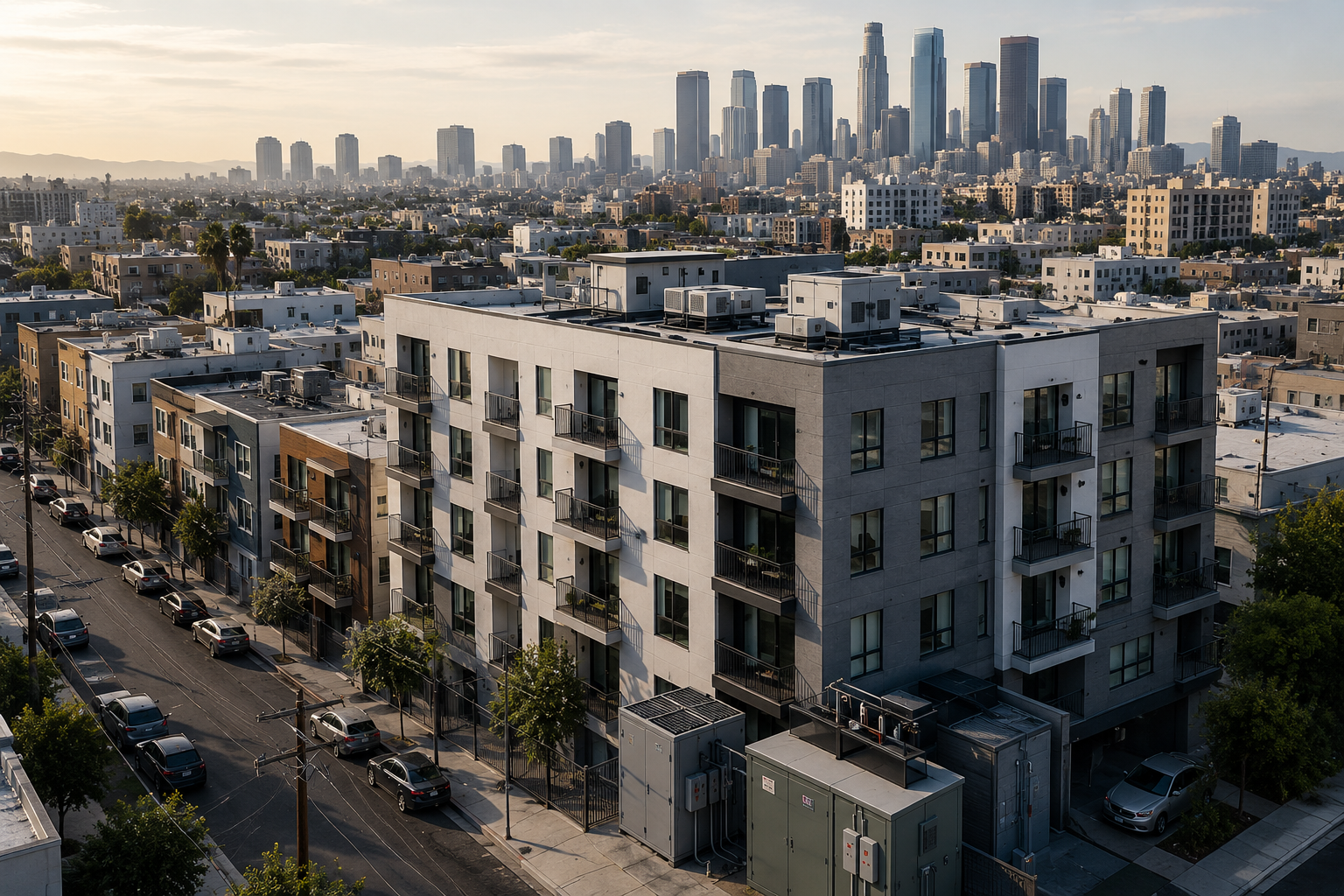
What Prevents Reaching Zero-Carbon Multifamily in Dense Cities?
We can all-electrify. We can add PV. We can spec heat pumps and batteries all day.
But in a dense mega city like LA, the real constraints show up fast:
Not enough roof space for meaningful solar. No room for central plants, thermal storage, or 1 MWh batteries.
Stacked electric loads — heat pumps, HPWHs, induction, EV charging — push up peak demand, driving larger transformers, service upgrades, and long utility approval timelines.
NEM rules that cap system size and pay export in credits, not revenue — so oversized PV makes no financial sense.
The result? A lot of "zero-carbon-ready" buildings that never actually get there.
The projects that do work don't chase an idealized net-zero label. They focus on what the site can actually deliver:
Reduce load first, then electrify — right-sized, not overloaded
PV sized to self-consumption (~80–110% of load), batteries for peak shaving
Heat pump DHW — usually the biggest single decarb lever; central-with-storage vs. per-unit is a design call, not a default
Manage peak demand — size the electrical service to a diversified, controlled peak instead of a worst-case sum
Energy modeling in schematic design, before the systems are locked
Zero-carbon in mega cities isn't a technology problem. It's a space, infrastructure, and regulation problem — and it's solved with pragmatism, not slogans.
How are you seeing this play out on your projects?